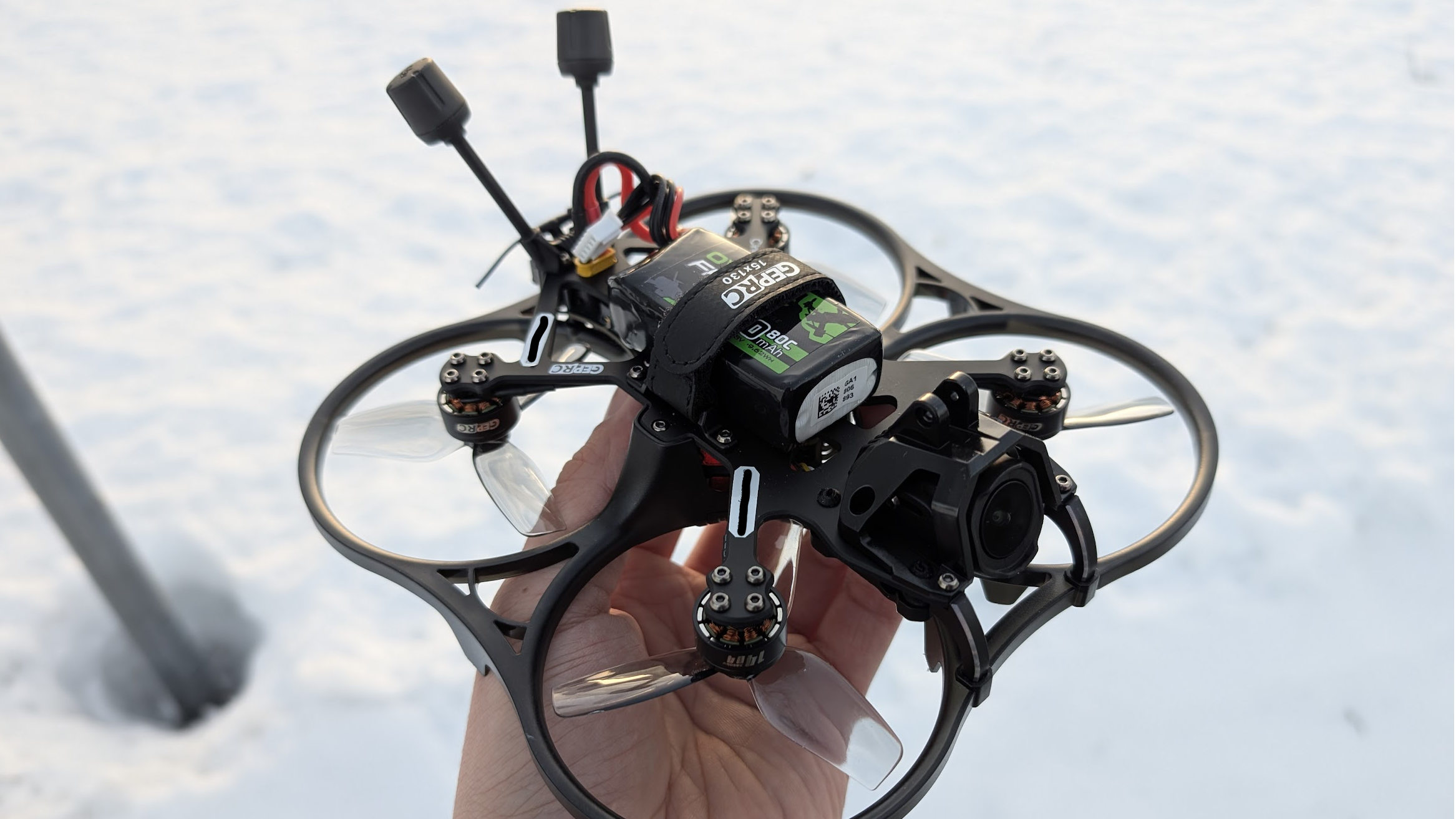
It has been a long time since I wrote a review, but since I had the opportunity to renew my flying machines recently with some new entry drones made by GEPRC, I wanted to share a comprehensive technical review where I analyse the new GEPRC Cinelog30 V3 FPV drone with the DJI O4 Pro air unit!
I found it to be the best candidate to replace my favorite drone for indoor/outdoor cinematic shooting so far: the first GEPRC Cinelog25.
How will the new comer GEPRC Cinelog30 V3 powered by the new DJI O4 air unit behave compared with the old but reliable Cinelog25, which has been considered by many professional FPV drone pilots one of the best cinewhoop (paired with a naked GoPro) for indoor cinematic usage?
Let’s go through this review to analyse what the newcomer brings, which are his pros and cons, and where it does better than the Cinelog25.
NB: I bought both the two drones by myself, with my own money, and I do not have any problem saying the flaws of this product.
UPDATE of 28/05/2025: Added GPS setup, stock GEPRC PID tuning sceen shot, new battery infos and two new GEPRC Cinelog30 V3 setups.

Table of Contents
GEPRC Cinelog30 V3 with DJI O4 Pro: where to buy and availability
The GEPRC Cinelog30 V3 is currently available with the DJI O4 Pro or in a frame plus electronic only kit (WTFPV), where you can add by yourself the video transmission system (I guess just the DJI O4 Pro, since it is taylor-made for it).
The ready to fly kit with the O4 Pro PNP, starts at 390 euro in China from Aliexpress, a bit less on Banggood (which sometimes has better deals but takes more time to ship to Europe), or in Europe close to 500 euro, VAT included. Personally, I bought it from Europe.
The current availability is definitely not the best. At the time I am writing, it is hardly available in Europe while shipment from China are catching up.
The WTFPV version costs between 180 Euro from Aliexpress and Banggood up to 250 euro in Europe, the latter VAT included. This version is hardly available in China as well as in Europe at the moment, with long expected delivery and shipment times.
GEPRC Cinelog30 V3: specification
Frame & Structure
- Model: GEP-CL30 V3
- Material: Carbon fiber and injected molded plastic elements
- Top Plate Thickness: 2.5mm
- Wheelbase: 128mm
Flight Controller (FC)
- Board Model: TAKER F722 45A 32Bit AIO
- Microcontroller Unit (MCU): STM32F722RET6
- Gyroscope: ICM 42688-P
- Betaflight Firmware: GEPRC_F722_AIO
- Betaflight Version: 4.5.1
- Flash Storage: 16MB
- ESC Current Rating: 45A
- ESC PWM: 24 Hz (might be worth to swicth to 48 Hz to avoid IMU issues with DJi O4 Pro)
- ESC Firmware: BLHeli_32 31.9.2 Prototype
- ESC Modes: Dshot600, Oneshot, Multishot
Motors & Propulsion
- Motor Model: GEPRC SPEEDX2 1404
- KV Rating: 3850KV
- Propeller Type: HQprop DT76mmx3 V2
Power System
- Battery Connector: XT30
- Recommended Battery: LiHV 4S (660mAh – 850mAh)
Video Transmission & Camera
- Video Transmitter (VTX): DJI O4 AIR Unit Pro
- Camera Model: DJI O4 1/1.3 inch camera
- Antenna: O4 Original
Receiver Options
- Default (PNP): Digital built-in DJI O4 receiver
- Alternative Options:
- ELRS 2.4G
- TBS NanoRX
Weight
- TBS NanoRX Version Weight: 187g ± 2g
What is in the box
The GEPRC Cinelog30 V3 comes in a nice black package, that looks very solid, with minimal information on it regarding the ordered version. The opening lid contains some nice infographics regarding how to safely use drones. Inside the box, we have the GEPRC Cinelog30 V3 already built with propellers mounted. Under it, we haev athe bottom layer of the box, with the provided spare parts.


In detail, there is an extra propeller set, three different colors camera protection covers, which also work as GoPro mounts. One is orange, one is black, and one is a kind of transparent gray. There is also an extra lipo strap and an adhesive battery pad to enhance the battery grip. Finally, there are some informative manuals, extra spare screws and a nice set of GEPRC stickers.
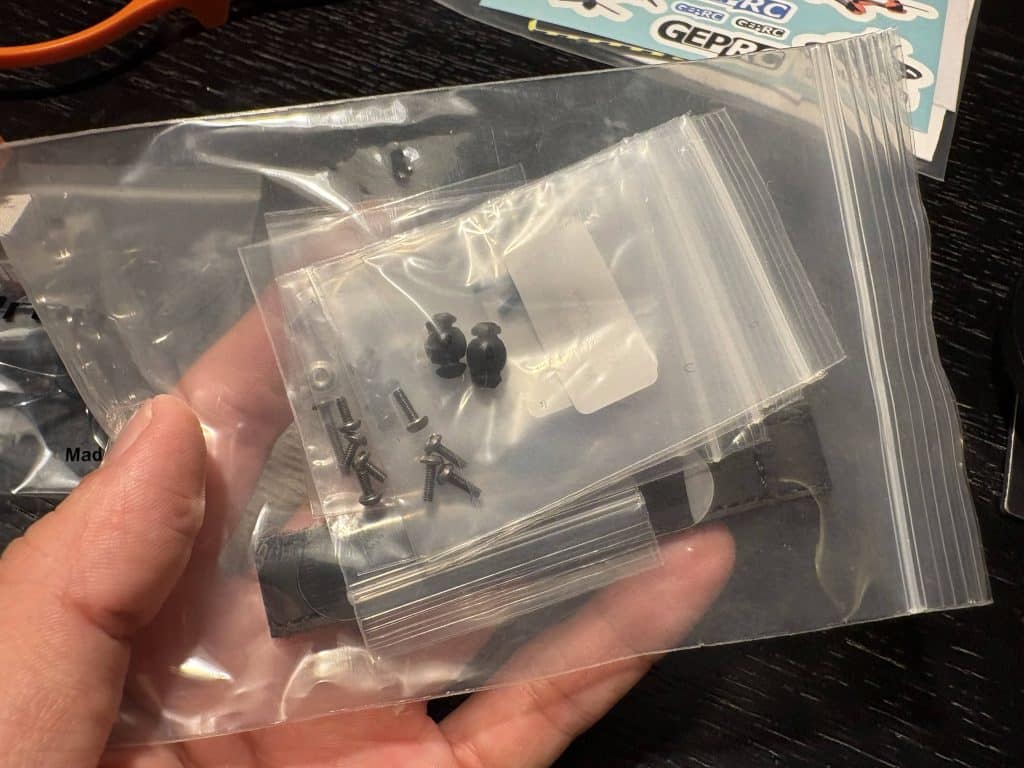
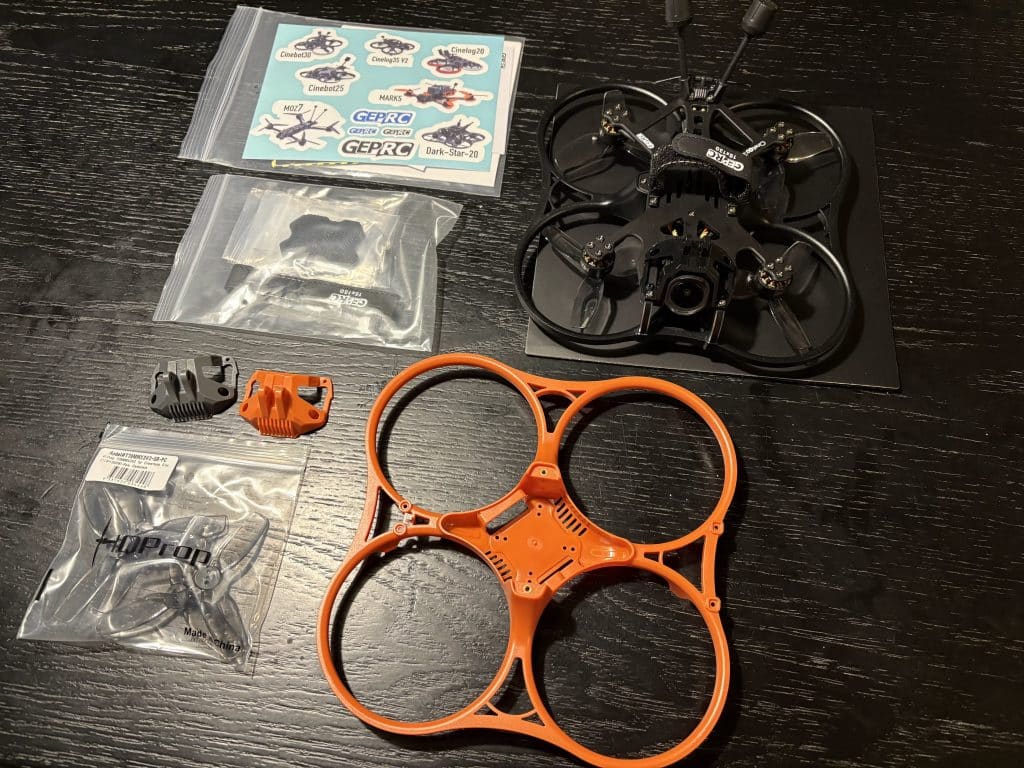
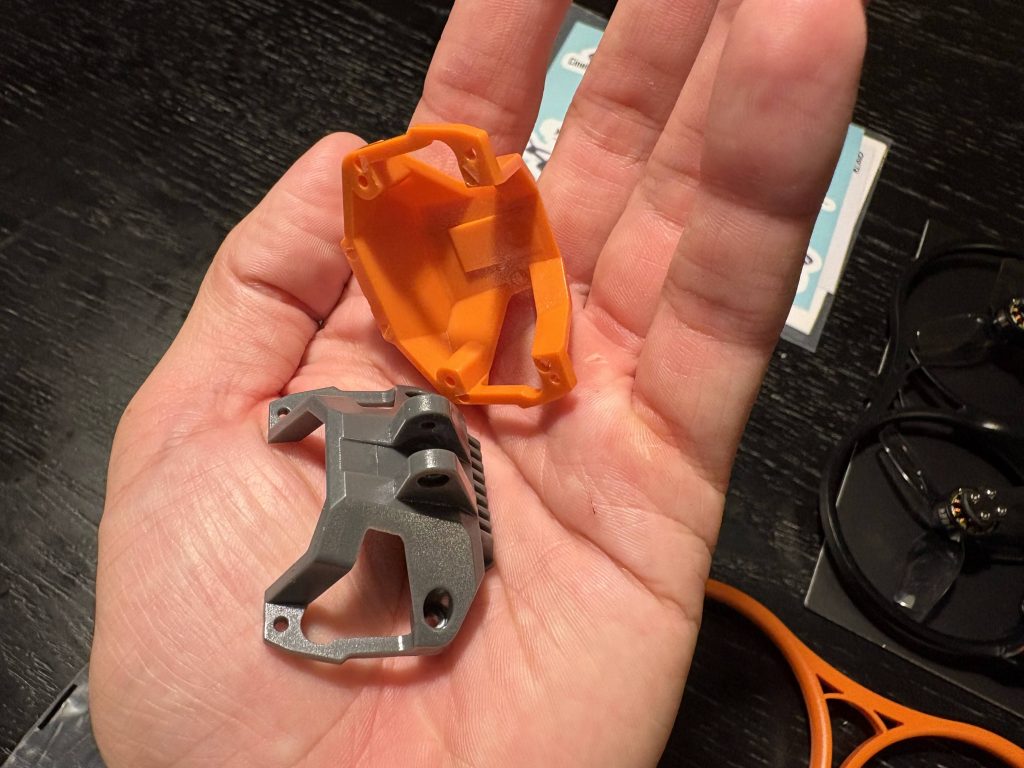
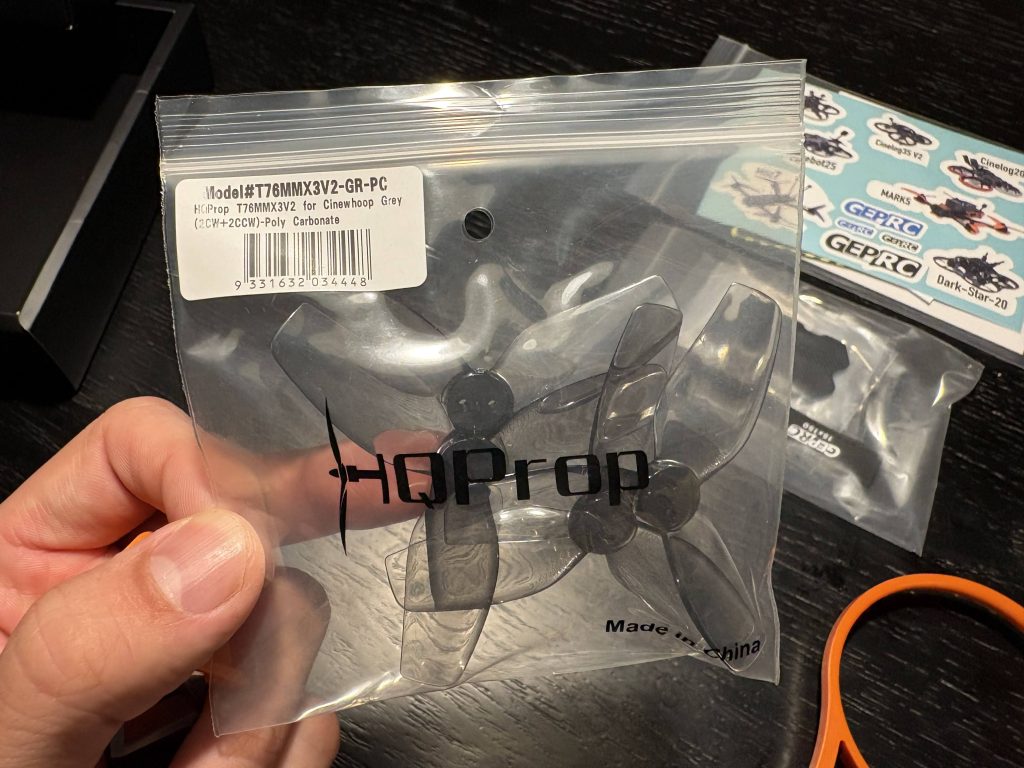
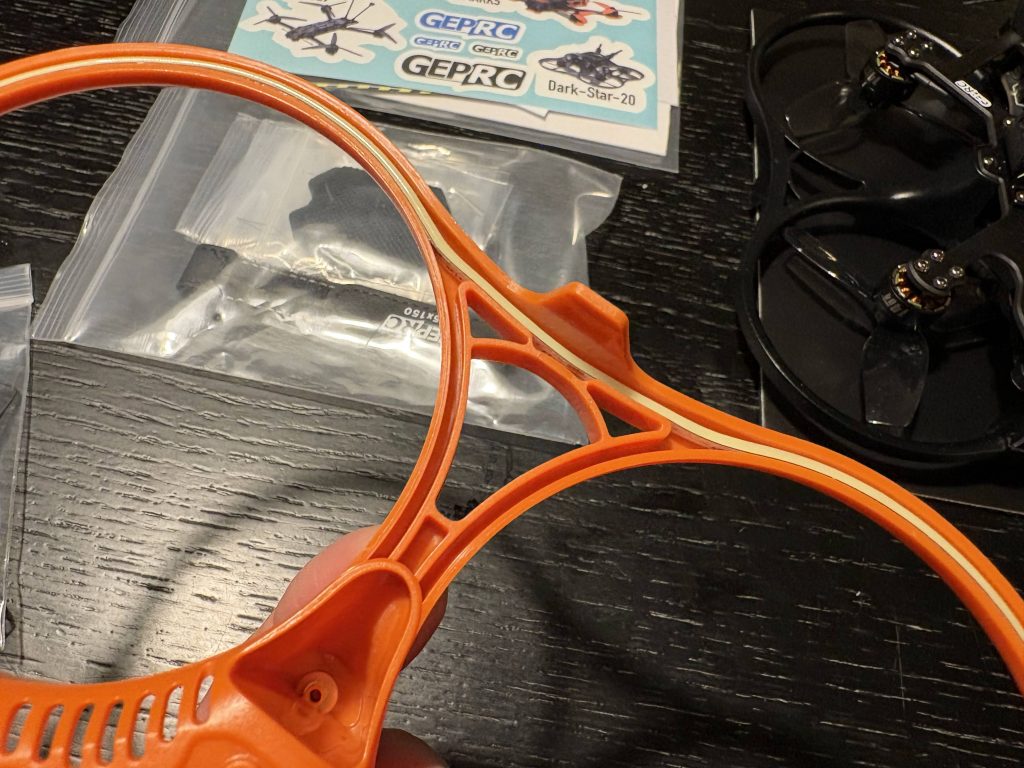
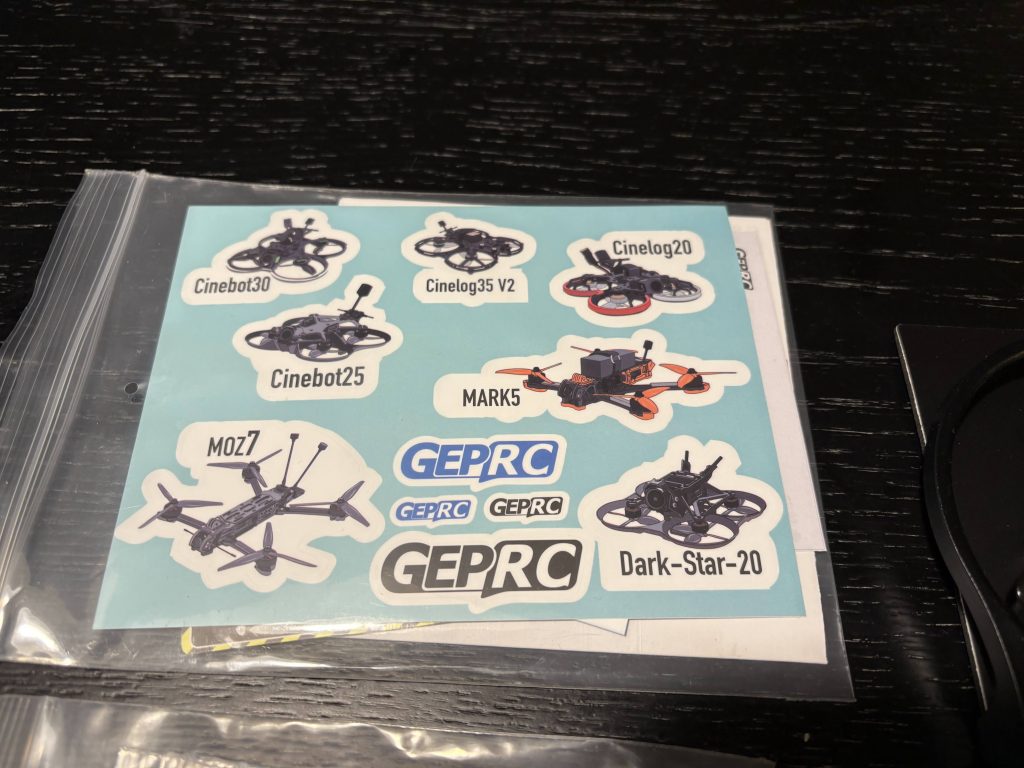
A comprehensive guide is included for quick setup instructions, including antenna assembly, propeller mounting, and flight controller configuration. The version with the DJI 04 Pro includes also a small DJI manual. Lastly, an additional propeller protective guard is provided, which I believe is a valuable addition, since, even if the drone is sturdy, it is likely to be the first component to fail.
The new GEPRC Cinelog30 V3 frame
GEPRC has introduced the third version of the Cinelog30, a 3-inch cinewhoop, with a redesigned frame tailored specifically for the new DJI O4 Air Unit. This revision includes several structural and aerodynamic changes aimed at improving performance and usability. But as with any upgrade, there are both improvements and trade-offs.

Compared to my previous Cinelog25, the most noticeable change in the Cinelog30 V3 is its reworked top plate carbon fiber frame, which look definitely more sturdy and robust. However, the most interesting change comes in the battery mounting system. Unlike most cinewhoops, where the LiPo strap passes directly through the carbon fiber top plates holes, GEPRC has introduced a new aluminum bracket system. This approach provides a more secure way to fasten the battery while reducing wear and tear on the carbon frame itself, protecting also the FC located on the other side of the plate.
One of the most significant design changes is the introduction of a single-piece injection-molded propeller guard. In the Cinelog25, the frame had four separate guards, one for each motor. The new design makes the Cinelog30 V3 more aerodynamic and lightweight, allowing for smoother flights and better efficiency at higher speeds. The material is also thin and flexible, further reducing drag.
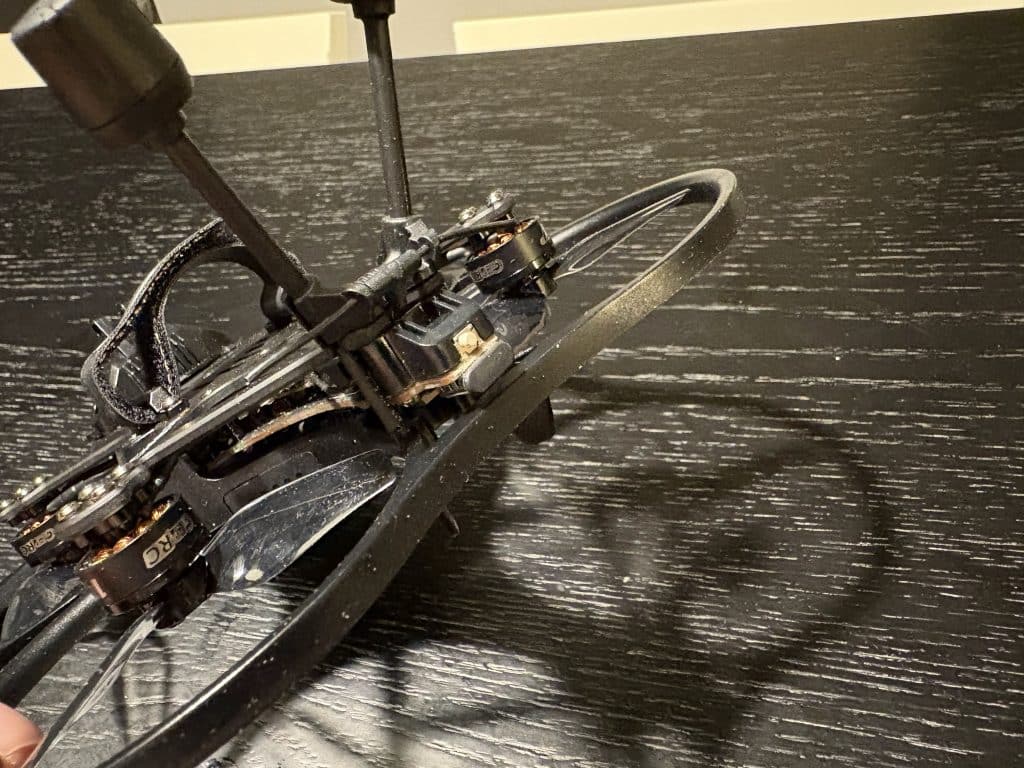
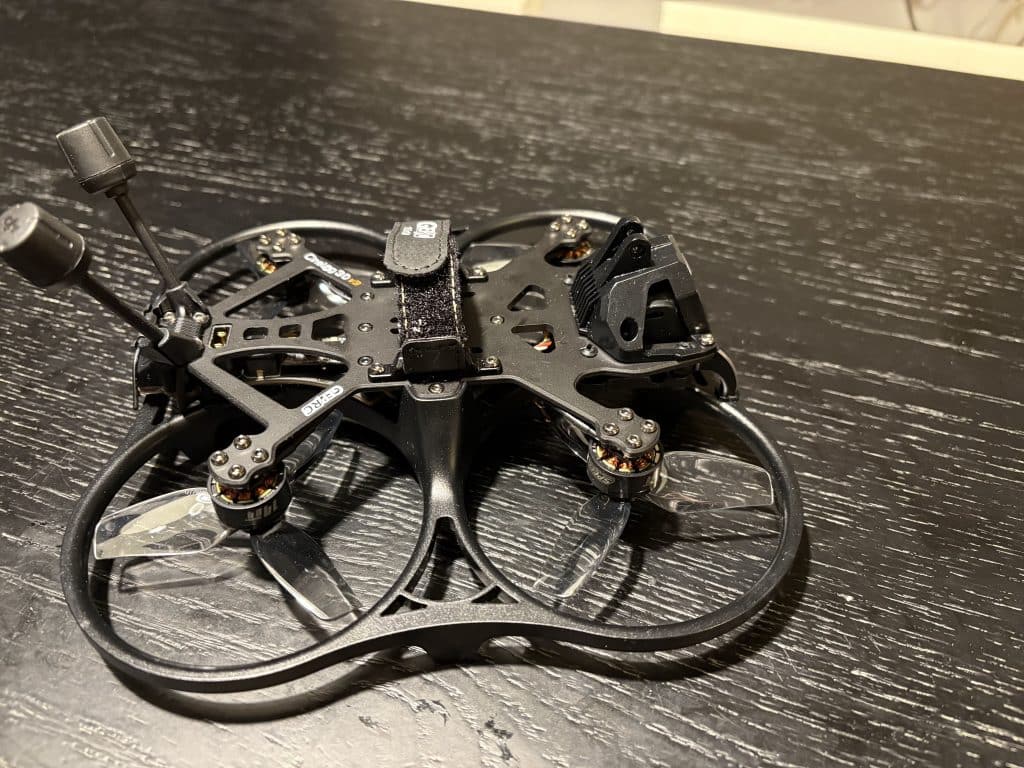

However, while this change benefits flight dynamics, it does raise some durability concerns. The previous Cinelog25’s cage-style propeller guards offered better protection and were easier to replace—if you broke one, you simply swapped out the damaged section. With the Cinelog30 V3, breaking the prop guard means replacing the entire piece. Fortunately, GEPRC includes a spare propeller guard in the box, but for frequent crashers, this could be a long-term inconvenience.
Another smart innovation in this version is the custom-designed PCB that integrates several key functions. One of the most frustrating aspects of earlier cinewhoops was the inconvenient placement of the USB port and boot button on the flight controller. To access them, pilots often had to remove propellers or struggle with tight spaces inside the frame. GEPRC has solved this problem by extending the USB port and boot button to the outer part of the frame, making it easy to reach in the bottom part of the drone.
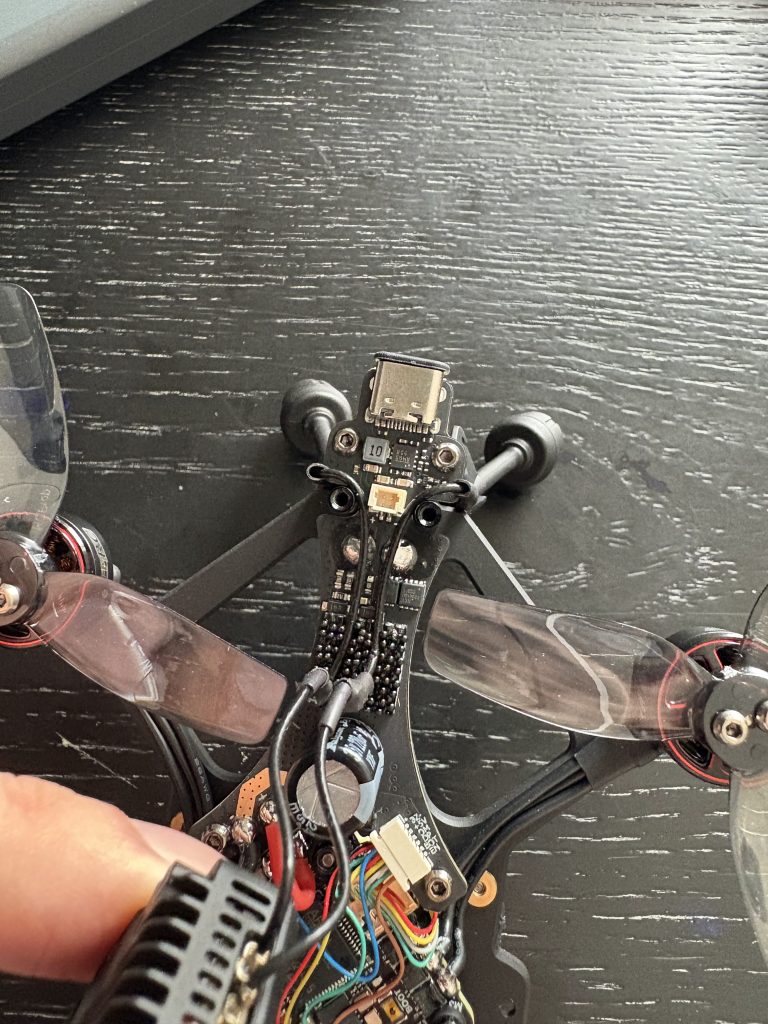
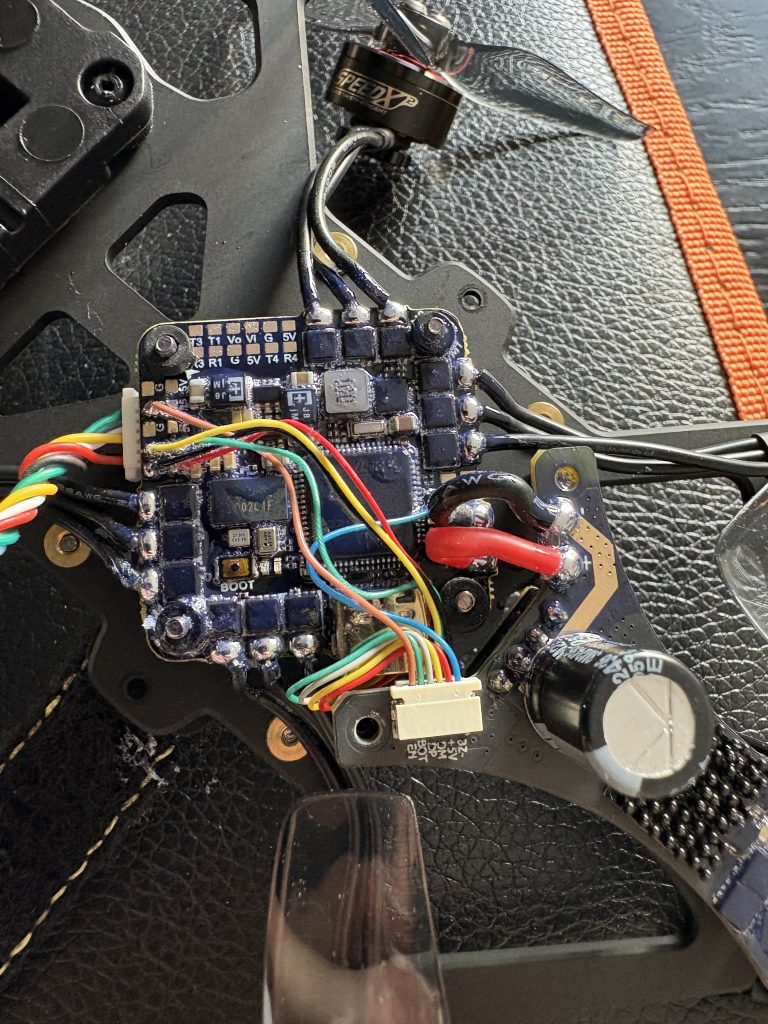
Additionally, the XT30 battery connector is now mounted directly on the PCB, providing a sturdier connection that reduces stress on the wires and keep the frame more clean. The board also integrates the capacitor, which helps filter electrical noise and ensures a more stable power supply for the flight controller. Besides that, the PCB also integrates a solderable four pin connector for the receiver. Moreover, there are also two JST connectors: one to connect the receiver to the flight controller, one to connect the FC USB pads to the PCB. The wires connecting the custom PCB to the flight controller are very thin and honestly, they don’t look very repairable.
The PCB also integrates the buzzer and the LED plug and controller … because yes, this drone has an LED strip in the outer propeller guard. And yes, you can turn it on and off from the radio. While some pilots might appreciate the added visual appeal, I personally removed them within five minutes of unboxing. For me, they add unnecessary complexity and weight.

Another well-thought-out decision is how GEPRC positioned the DJI O4 Air Unit. Like in all previous Cinelog models, the V3 keeps the air unit at the center of the body, ensuring optimal weight distribution for smoother and more predictable flight behavior. Additionally, GEPRC has added silicone rubber covers to protect the microSD slot and USB-C port of the O4 unit.
While these covers aren’t the easiest to open and close, they do provide extra protection for one of the most expensive components on the drone—especially since the air unit is located at the bottom, which work as the landing pad. Personally, I would have preferred a thinner, more flexible rubber cover, similar to the one on the rear USB-C port, but the added durability is still a plus.

At first glance, the Cinelog30 V3 feels incredibly well-built. The custom PCB eliminates the need for excessive wiring, making the built clean while integrating the receiver, USB port, LEDs plug, capacitor, buzzer and XT30 connector. The new battery strap system also keeps the LiPo securely in place.

However, despite these improvements, the frame feels overcomplicated. Compared to the original Cinelog25, GEPRC has introduced many additional parts, screws, and structural reinforcements. While this does make the frame more durable, it also adds unnecessary weight, which is a significant concern for a lightweight cinewhoop where every gram matters.
One of my biggest complains with this redesign is the number of screws used in the assembly. The PCB at the rear section uses eight screws: GEPRC could have aligned the holes and used plastic spacers to reduce the count to four.
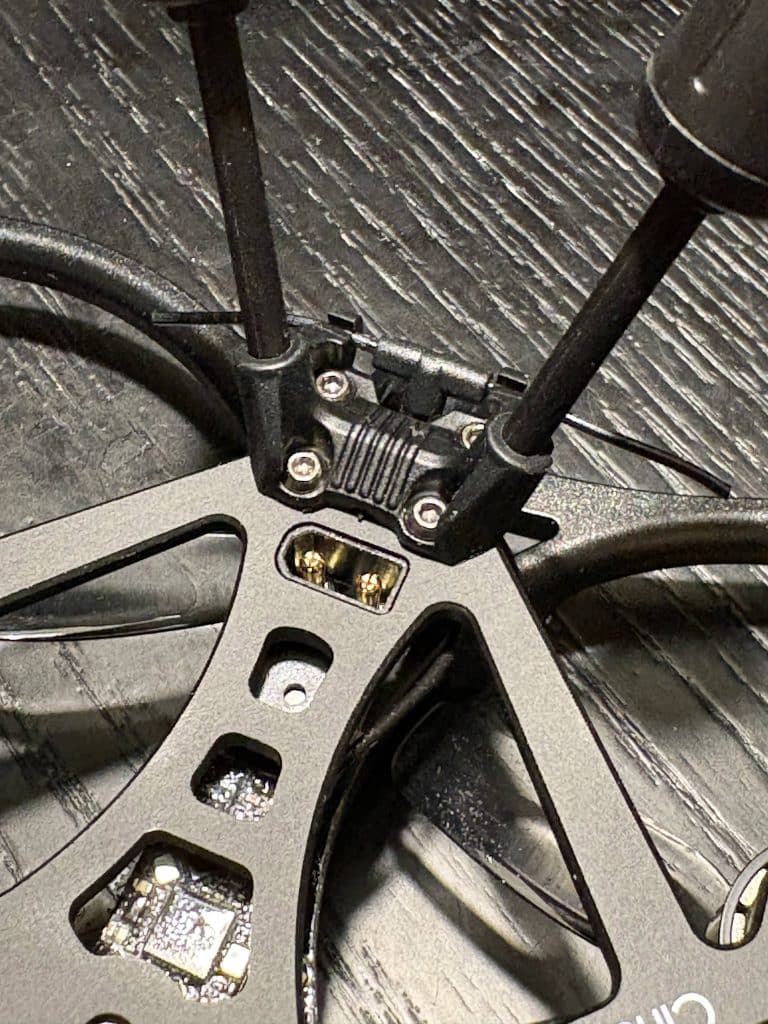
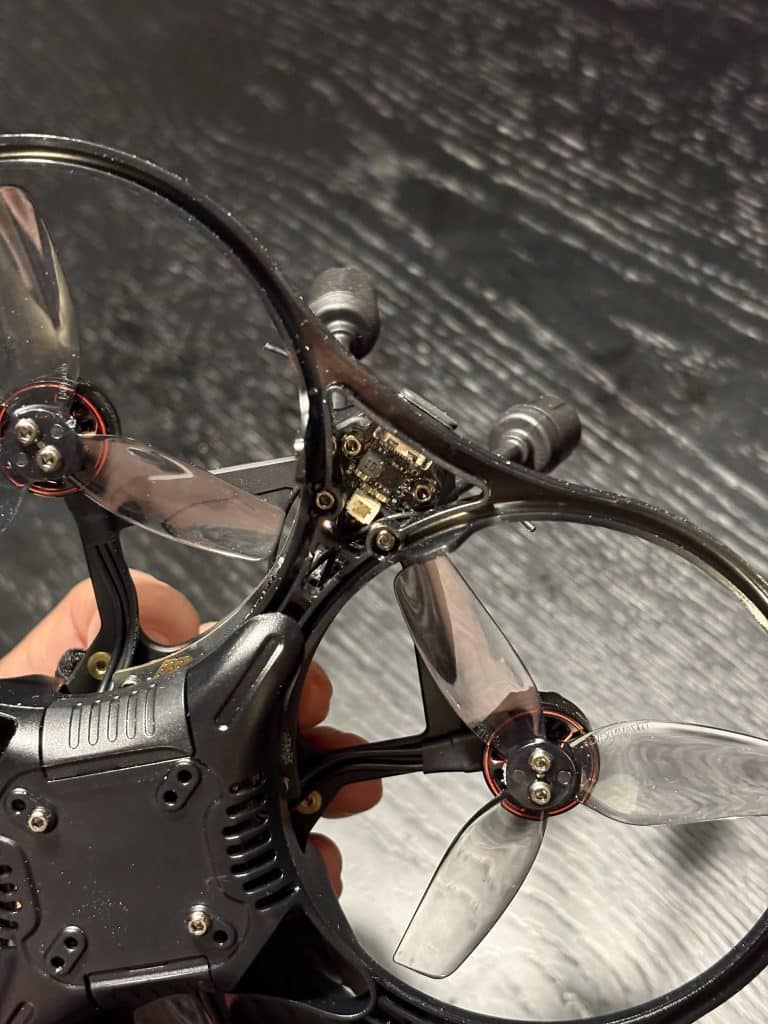
This extra complexity contributes to additional weight while also making field repairs more time demanding. For example, to remove the propeller guard, you need to:
- Remove four screws just for the air unit.
- Remove six additional screws to detach the frame—two from the front, two from the back, and two from the top.
That’s a total of ten screws just to access a single component, making quick repairs in the field an unnecessarily time-consuming process.
The weaknesses
As I mentioned, the GEPRC Cinelog30 V3 brings several enhancements to properly host the new DJI O4 Pro. However, after spending some time with it, I feel that GEPRC has overcomplicated certain aspects of the frame. While some changes improve durability and flight stability, others add unnecessary weight, complexity, and maintenance difficulties.
One of the biggest weaknesses of this drone is the DJI O4 camera mounting system. The camera is soft-mounted on rubber dampeners, a common design choice in all the previous Cinelog to reduce vibrations. However, in this case, there’s a major flaw: if you remove the camera protector lid to save weight and stay under the 250 grams threshold, in the event of a crash, the rubber bands holding the camera can detach, causing the camera to potentially hit the propellers with not nice consequences.
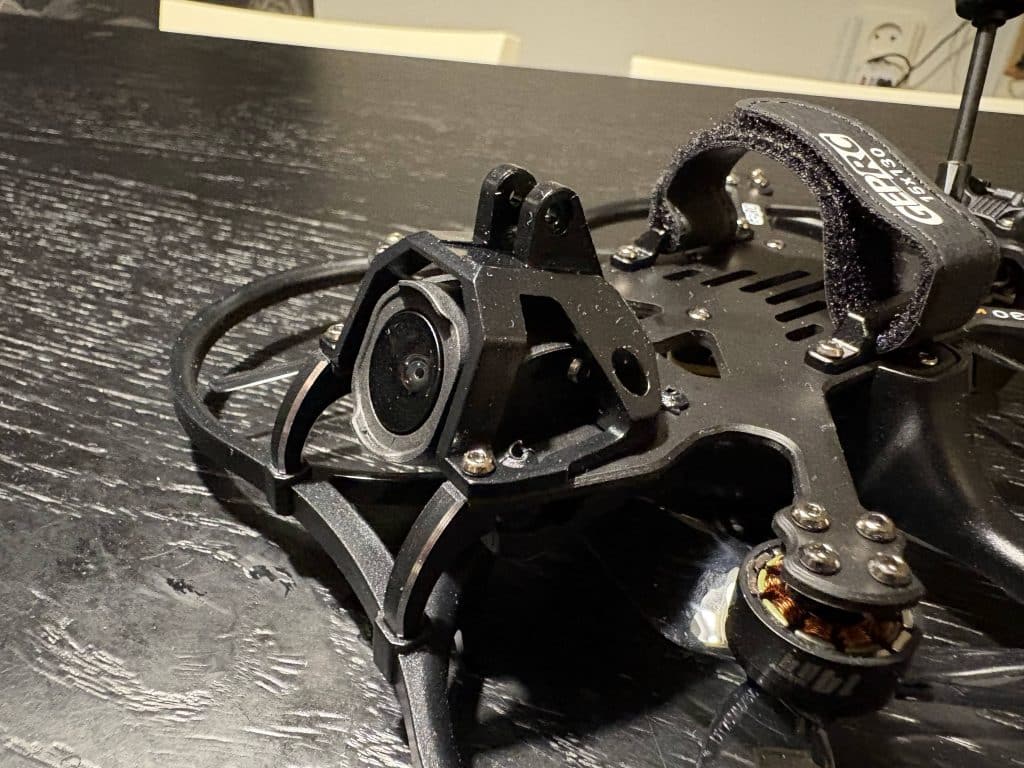
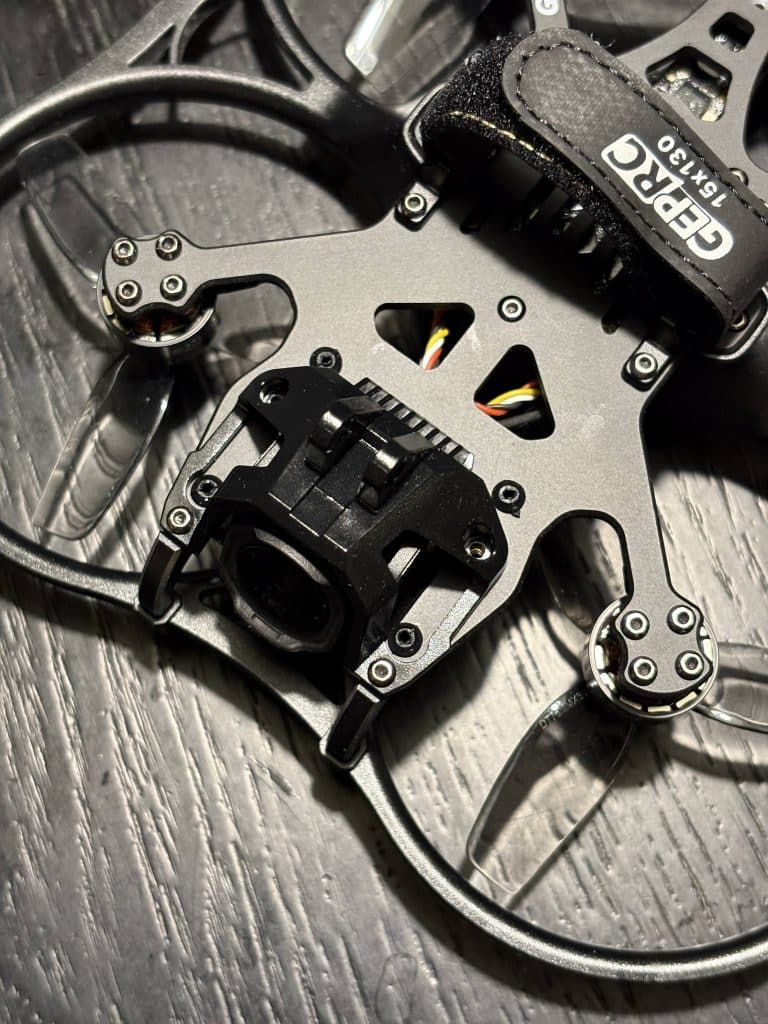
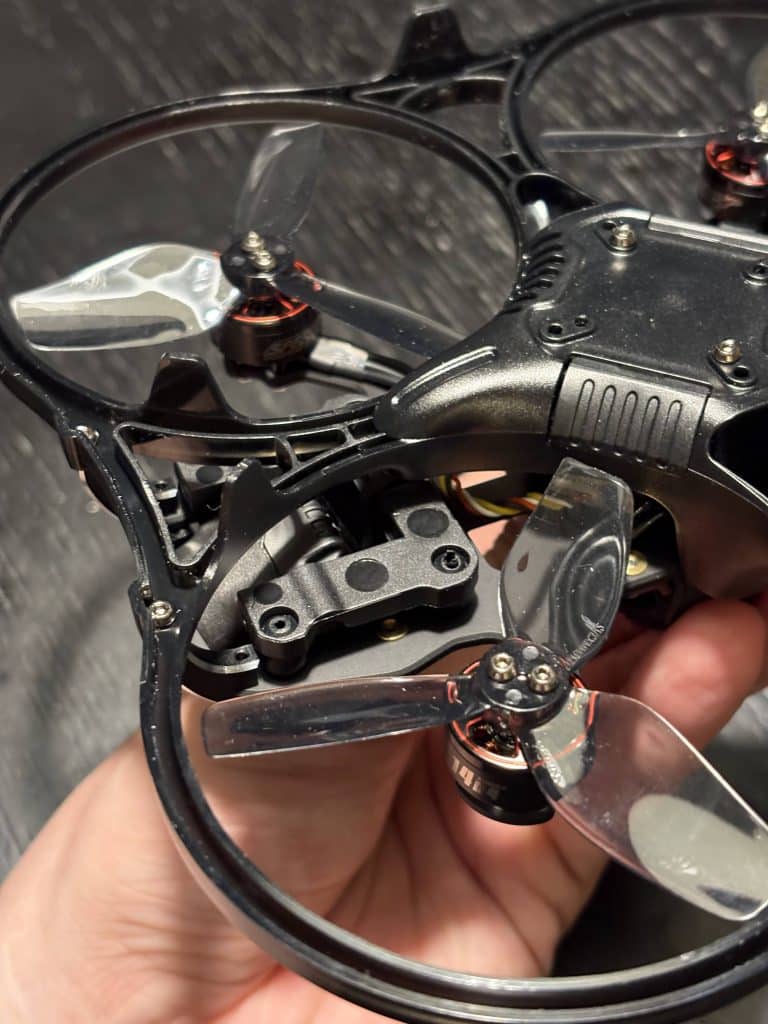
This is a big oversight, especially if you remove the camera protector to stay within the sub-250 grams category. It’s almost like they are asking you to compromise the structural integrity of one of the most expensive parts of the build. To be fair, keeping the camera protector installed prevents this issue, as it securely holds the dampeners in place. The problem? It adds extra weight (about 5 grams), which then limits your battery options for staying under 250 grams.
This could have been easily fixed by redesigning the camera mounting system so that it remains secure, with or without the protector lid.
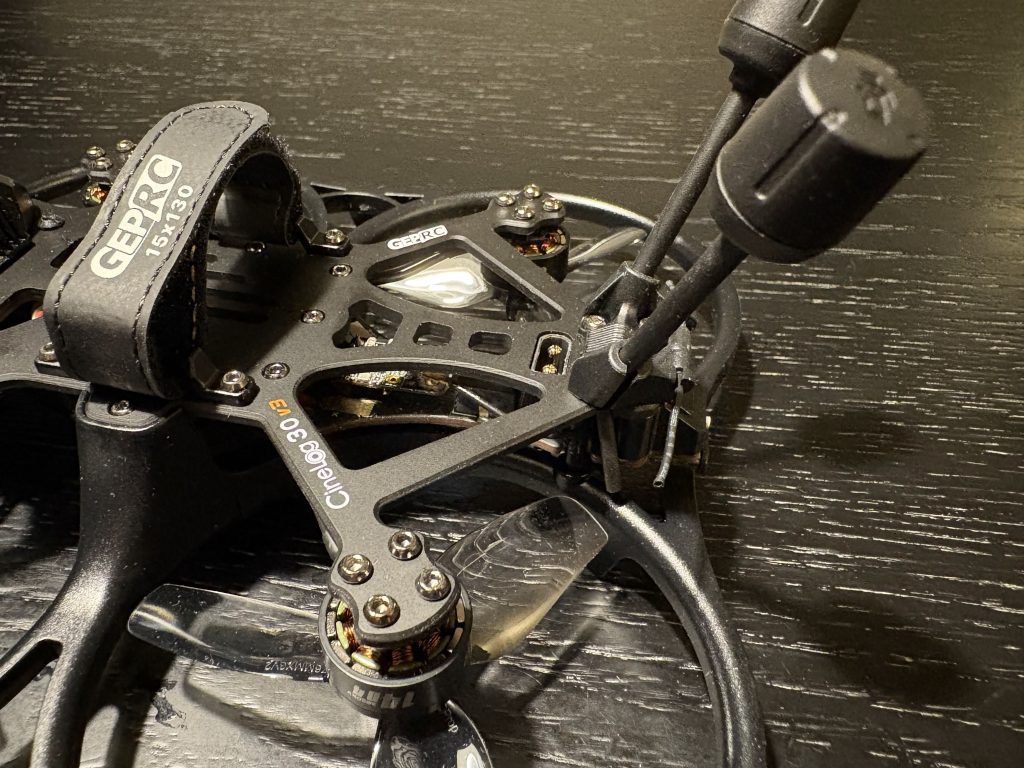
The second issue is the antenna mounting system at the back of the frame. At first glance, it looks like a good idea: 1) the antennas can fold down when not in use, making transportation easier; 2) the design keeps them elevated, away from the body of the drone, for better signal reception.
However, in real-world flying, there’s a potential problem: if you crash or flip over, the antennas can easily fall into the propellers. The DJI O4 Pro antennas are expensive, and if they get damaged, you’re looking at an annoying and costly repair.
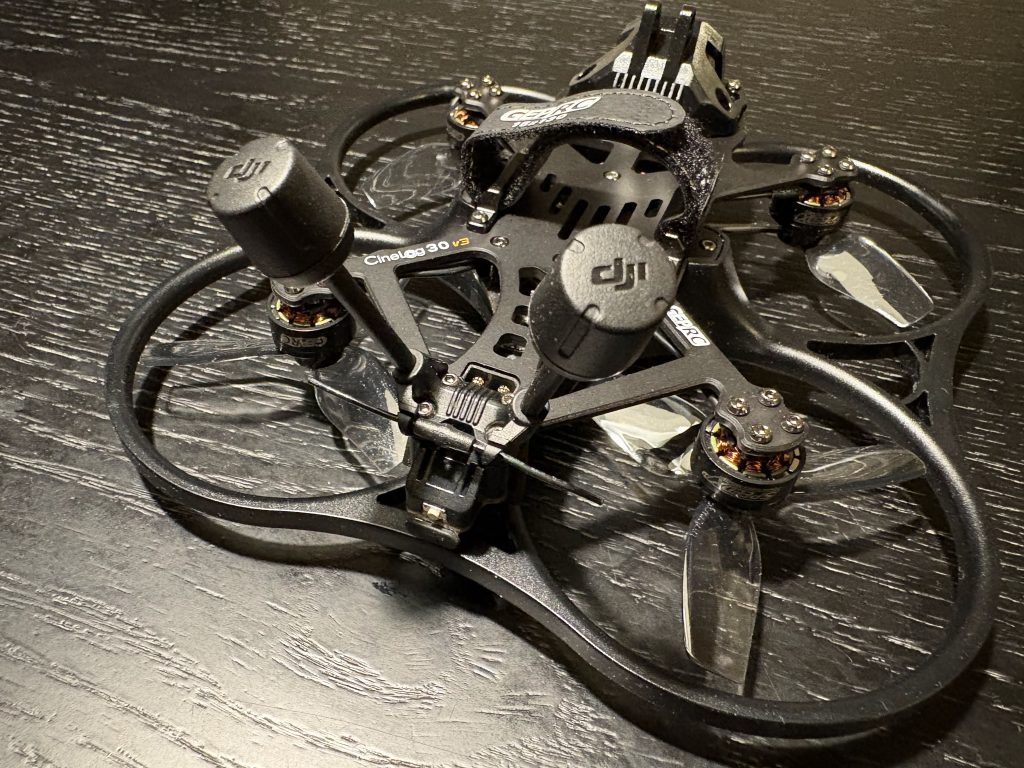
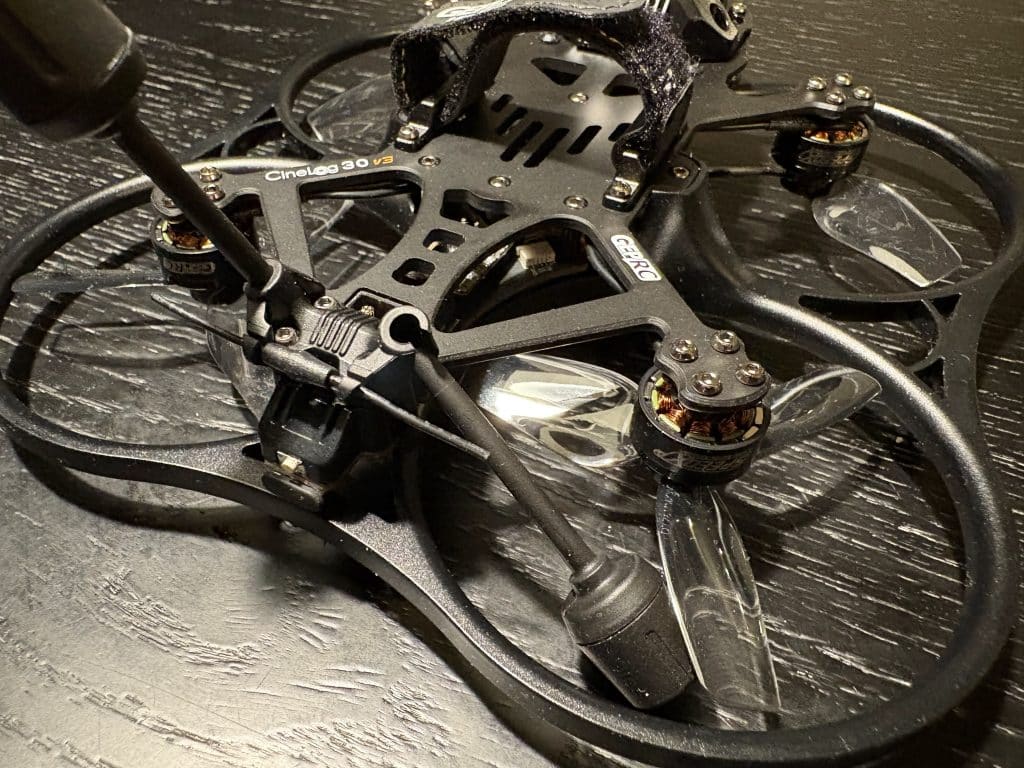
I plan to fix this issue myself by securing the antennas with zip ties or 3D printing a stronger mount, but this shouldn’t have been necessary. Given that this is a cinewhoop designed for cinematic flights, not aggressive freestyle, I would have gladly sacrificed the built-in LED strips for a more robust antenna holder. Durability and reliability should always come first.
Bring it below the sub-250 grams threshold
One of the biggest selling points of this drone is that it can be flown legally in sub-250 grams weight category, A1 in Europe. But let’s be honest—achieving this is not as simple as advertised. With all stock components (camera protector included), the bare drone (without battery) weighs around 188-190 grams, depending on the receiver version. This means you only have about 60g left for a battery to stay under 250 gram.

Most good 4S 650mAh batteries weigh around 70-75g, which pushes the total weight to 253-258g—just a bit over the limit.
If you have to keep it below that weight threshold, like me, then you have these options:
- Remove the LED strip in the propeller guard → Saves around 5 grams.
- Remove the camera protective part → Saves another 4-5g.
- Find a 650mAh battery under 60g → Limited options, mostly LiHV packs.

While these modifications can get you under the limit, GEPRC could have put a bit more effort to optimize the frame weight from the beginning. With small redesign and reuse of holes and screws for multiple parts, they could have easily saved 10-15 grams.
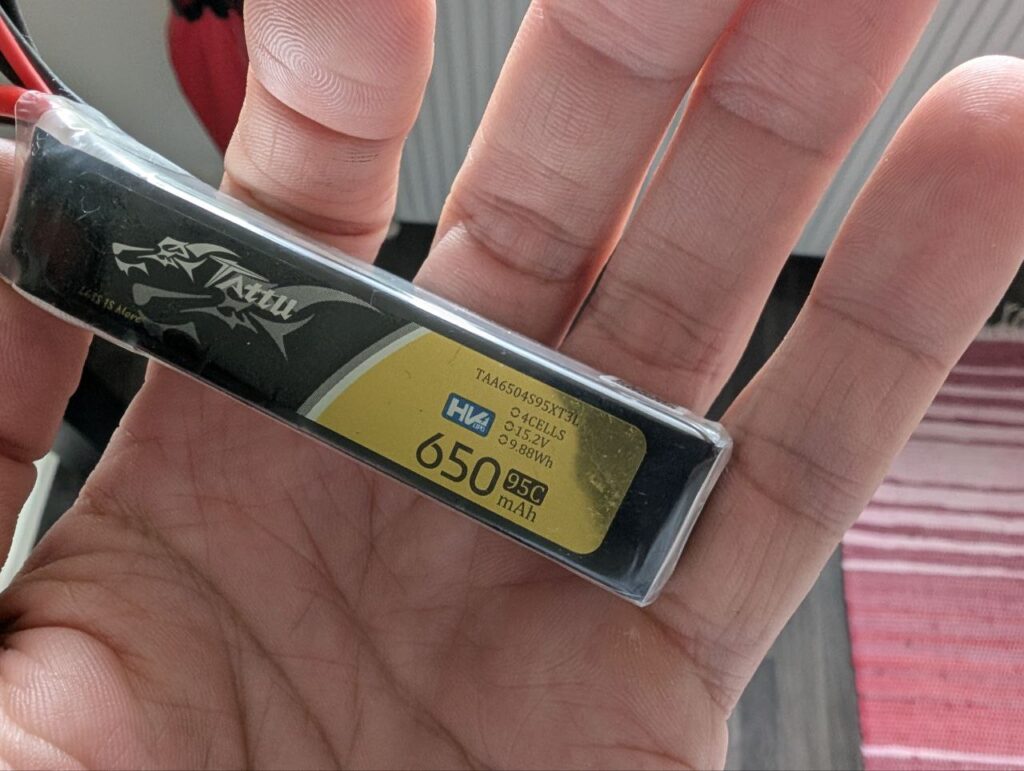
UPDATE May 2025: new Tattu 4S LiHv battery to bring it below 250gr
In the end I bought some new LiHV 4S 650 mAh 95C batteries from Tattu (LINK), in detail the Long Pack version, which have a weight of just 60gr. This managed not only to bring the weight of the quad below the 250gr threshold with the camera protection canopy, but also allowed me to add a GPS module on one of my Cinelog30s. All while keeping it below the 250gr threshold.

How does it fly?
Honestly, really well. I enjoy building drones, but when it comes to work-related flying, I prefer having multiple backup drones with identical configurations—same hardware, frame, and tuning. That’s why I’ve already ordered two more Cinelog30 V3.
One of the best things about GEPRC’s tuning is that their factory settings are already quite good. You don’t need to spend hours tweaking and optimizing—it flies great right out of the box, you just have to set your rates.
The drone is stable, responsive, and steady, which is exactly what I need for cinematic work. Of course, it has some vibrations during aggressive moves or in windy conditions and isn’t designed for aggressive freestyle flying, but that’s not what I need. For cinematic flights, it delivers smooth, controlled movements with enough power when needed. The hovering throttle is around 20%.
I didn’t noticed any jello, but to further be sure to avoid it, especially during outdoor flights in sunny days, I would recommend to use a proper ND filter. It can help a lot to avoid Jello. I will add more videos in the next weeks. So far here you are a quick one:
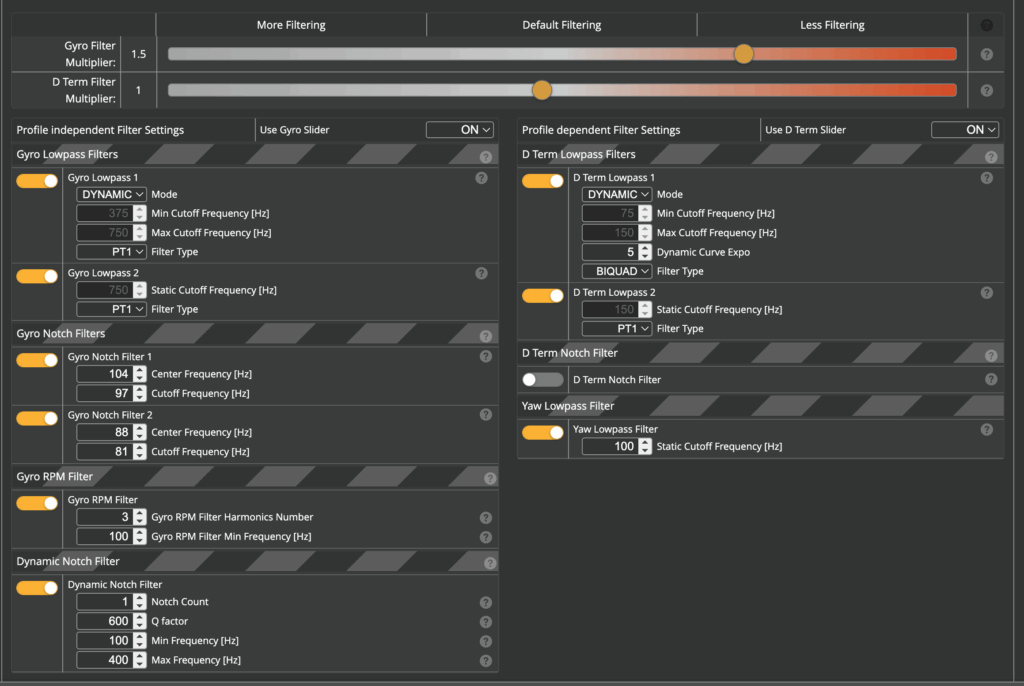
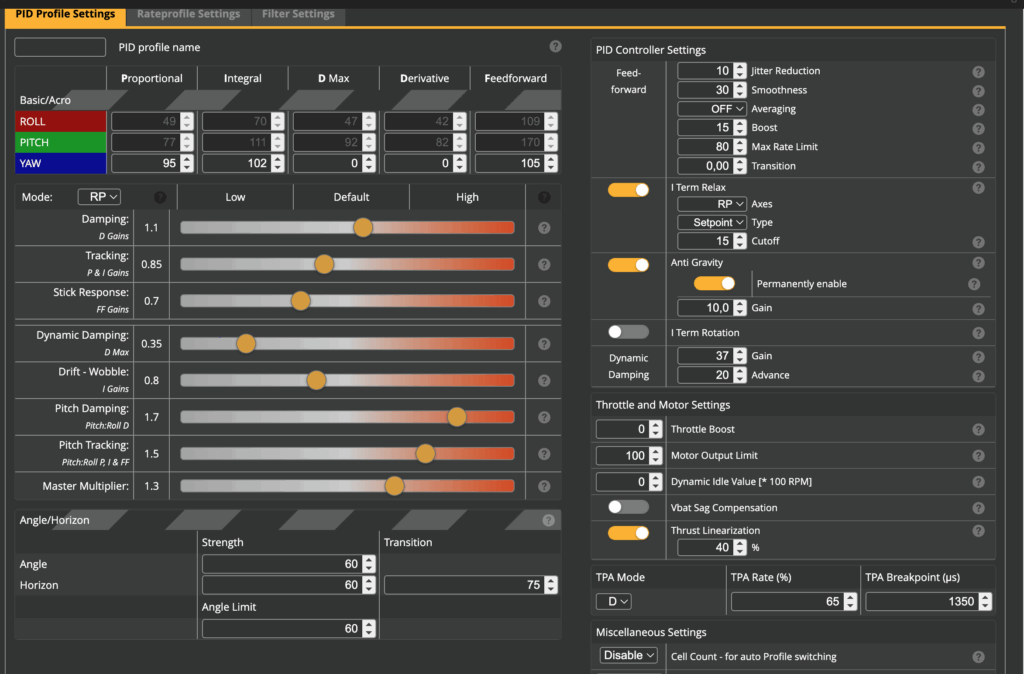
Here you are the stock PID and filter settings from GEPRC, as well as a full CLI dump (LINK).
Flight time
As I mentioned, I primarily intendo to fly this drone in the sub-250 grams category, therefore weight management is crucial when choosing batteries.
Currently, I use an Ampow 4S 650mAh LiPo battery, which weighs around 67 grams. This keeps the GPERC Cinelog30 V3 total weight at 247 grams without the LED strip and the camera protective cage. This setup gives me a bit of margin for adding small accessories like an ND filter (+1 gram) and the drone ID label. Battery weights can vary slightly, so having some flexibility is important.
With this battery, I get a decent flight time compared to the Cinelog 25. On the Cinelog 25 (without a naked GoPro), I get around 5 minutes of ACRO cruising flight time, sometimes a bit more or less. Using the same battery and without the naked GoPro, on the GEPRC Cinelog30 V3, which has larger propellers, I can fly from 6 to 6.5 minutes, showing an increase in efficiency. With a more aggressive flight style or windy conditions, I can get between 4 to 5 minutes.
If I add a naked GoPro to the Cinelog 25, the flight time drops to around 3.5 to 4 minutes due to the extra weight. It’s worth noting that my Cinelog 25 is the first version, which came with 1204 motors. These motors are probably not the best, since they got replaced after a few weeks of the Cinelo25 release to the 1404 version.
Could an 8-minute flight time be possible on the Cinelog30 V3? Maybe with a 720mAh LiHV battery, but I have doubts. Since I can already achieve 6 to 6.5 minutes with a 650mAh battery, a slightly larger capacity might push it a bit further, but staying under 250 grams is tricky.
For those who don’t care about the weight limit, using a 950mAh 4S battery could easily give 8-9 minutes of flight time, according to online reviews. That’s a great improvement but comes at the cost of exceeding the sub-250 grams category.
UPDATE May 2025: new Tattu 4S LiHv battery give a bit more of flight time
With the new Tattu LiHv 650 mAh 95C batteries, I managed to squeezed out a bit more of flight time. I would say the average flight can now last from 5.5/6 minutes with a bit more aggressive flight, up to 8 minutes in a more relaxed style. On average, I would say with these new batteries it is definitely possible to achieve the 7 minutes flight time range. I also bought the same battery in 850 mAh version, let’s see if it can squeeze out 8 to 9 minutes of flight.
How to add the GPS to the Cinelog30 V3
Well, since with the new batteries, the weight of the drone including the protection canopy has decreased of a few grams, why not but a small M10 GPS for safety purposes?
I do own three Cinelog30 V3 that I use mostly for work in different environments, one has no GPS and I decided to bend down the antennas on the propeller guard frame, thus lowering its profile and making it more robust to crashes with a small reduction (I feel the reduction of range and penetration of the video signal, but for my usage is still more than enough, still way stronger than the old Caddx Vista I was using on the Cinelog25).

On the second one I added a super tiny and lightweight 15 euro GPS M10 module, from FlyFishRC but all the GPS based on the M10 chipset are the same. There exist also some version with a compass built-in, like some GEPRC and Foxeer models, but I think for my use it is overkill. Besides being very small and lightweight (12x12mm, 2.2gr), it is working quite well and it is even faster than my DJI Mavic 3 in the initial fix. Compared to the old BN220 GPS on my other 5 inch drones, is much faster and even with such small antenna can lock easily 14-15 satellites.
I added it on the front left arm so the wiring is quite easy to do without any super long cabling. Also, most of the free UART ports are closer the front part of the quad.

The version without compass requires only 4 cables, UART TX and RX, GND and 5V, all available on the FC in close-by pads. I used the UART number 4. The setup in BetaFlight is quite easy too, here the steps needed:
- in the Port page, on the used port (UART4 in my case) chose the GPS option and the BAUDRATE. I set the latter to 57600, enough to provide a 10Hz update of the GPS data to the FC for the failsafe GPS Rescue option of Betaflight 4.5;

- in the Configuration page, enable the GPS and Barometer sensors. The barometer works quite well for the altitude estimation, sometimes much better than the GPS altitude. By the default BF mixes the two altitudes based on the accuracy of the GPS data (DOP), thus if the DOP is quite high, it will relies more on the barometer than the GPS altitude estimation. You can force to use only the barometer or the GPS. On some other drones I clogged the barometer while doing the conformal coating, thus I rely entirely on the GPS.

- also in the Configuration page, I would recommend to lower the PID loop value from 8 to 4KHz, to leave the CPU more resources for the GPS Rescue functions. With the stock GEPRC filtering settings, (the Gyro Low Pass 2 filter) , no aliasing should be introduced, thus the flight performance are not affected.

- in the GPS page, I set the protocol to UBLOX, and enabled to use Galileo constellation, as well as to set the home point only once on the first ARM. Auto config should be active by default. The ground assistance can be left to AUTO too.

- In the Failsafe tab, you can setup the GPS Rescue option. I honestly left most of the parameters on the stock values. The only things I changed are altitude mode, which I set to Current Altitude, then I set the Initial Climb to 30 meters, while all the other options are on the stock values. I tested multiple times and they seem to work fine for me.

- finally, in the OSD tab, don’t forget to add the GPS information the OSD, like altitude, longitude (with 7 decimal), latitude (with 7 decimal) and the home distance as well as the number of satellite and the home direction.


The process should now be done! I do personally use the GPS for two main reason:
- I like to have the arrow indicating the home direction, which helped me several times during flights in quite vegetation dense areas, as well as during some random fog or low clouds covering my flight area, thus making me impossible to realize my take off positioning without the indicator.
- In case of crash, both in the Googles and in the radio, you can access the coordinates and try to search and hopefully find the drone. It saved my drones a couple of times already, together with the beeper.
I am not a huge fun of the GPS Rescue but for sure it is another reason to add a small GPS, since with BF 4.5 it works quite well, althouth I would not rely on it that much. Off course on my radio I have a switch to trigger the GPS Rescue procedure in case something goes wrong.
Cinelog30 V3 vs Cinelog25: the final successor?
The Cinelog 25 has been my go-to cinewhoop for a long time. I got the first version when it was released, but I was unlucky because GEPRC updated the motors just weeks after launch. My version came with 5-blade propellers, whereas newer ones switched to 3-blade props.
I’ve been waiting for a Cinelog 25 V3, optimized for the new DJI O4 system. but so far GEPRC has not released it yet. The Cinelog 25 became popular for indoor cinematic flying because of its durability and stability. One of its biggest innovations was the soft dampeners—not only for the onboard FPV camera but also for the Naked GoPro, making it jello-free and vibration-resistant. That was a key reason for its success.

However, after four years, I decided to upgrade. Since I no longer plan to use a GoPro, I switched to the DJI O4 system, which gives me two options: a lightweight 2-2.5″ cinewhoop or a more powerful and efficient 3″ setup.
This new Cinelog 30 V3 is noticeably more powerful than the Cinelog 25, making it better suited for more outdoor flying. While the Cinelog 25 can chase bikes and slow cars, it’s not efficient for that purpose. A fast-paced chase depletes the battery in 2.5-3 minutes, whereas this new drone could probably manage 4 minutes or more in similar conditions. I have to try.
One of the key advantages of this new frame is its improved aerodynamics. Without a GoPro on top, airflow is cleaner, and the thin prop guards reduce drag. This makes it fly better than the previous Cinelog25. However I still think that carbon fiber caged cinewhoops, are probably those with the best ACRO performance and aerodynamics.

Of course, being a cinewhoop, it still has some wobbling in the wind, but overall, it’s more outdoor-capable than the Cinelog 25.
Another major upgrade is the DJI O4 system, which significantly improves range compared to the original DJI Vista or Air Unit V1. This means I can cover more distance, though I would never recommend flying far without GPS.
Despite a few weaknesses, the Cinelog 30 V3 looks like a worthy successor to the Cinelog 25 + GoPro Naked combo, at least for my use cases. It has a bit more efficiency and flight time, way increased range, more power and speed, thus it handles outdoor better and it can still stay under 250 grams with a careful battery selection.
However, if you plan to use a Nkaed GoPro, I would not recommend this drone—there are better options for sub-250g setups.
I’m curious to see if GEPRC will release a Cinelog 25 V3 optimized for DJI O4. That would be an interesting comparison against the Cinelog 30 V3.
Conclusion
That’s about it for this review—at least for now. In the coming weeks, I plan to add some video comparisons to showcase performance differences.
Right now, it’s still winter here, and I’ve already applied conformal coating to the new Cinelog30 V3. Without it, a simple crash/land into snow could end a flying session instantly.
I’ll be testing it more thoroughly soon and will report back with deeper insights. So far, my impressions are very positive—but not perfect. There are a few questionable design choices, and I feel they could have optimized the weight a bit better. Maybe they are keeping this frame design for future updates—who knows?
That said, I truly believe this is the big brother of the Cinelog 25, and for me, it’s a natural replacement. Also, since I’m switching from DJI V1 to DJI O4, this upgrade makes even more sense.

Availability in Europe is still limited, but it’s catching up. Hopefully, in the next few weeks, it will be widely available everywhere.
The ready to fly kit with the O4 Pro PNP, starts at 390 euro in China from Aliexpress, a bit less on Banggood or in Europe close to 500 euro, VAT included.
The WTFPV version costs between 180 Euro from Aliexpress and Banggood up to 250 euro in Europe, the latter VAT included.